
 ZeeroGPT
Loading...
ZeeroGPTLoading...
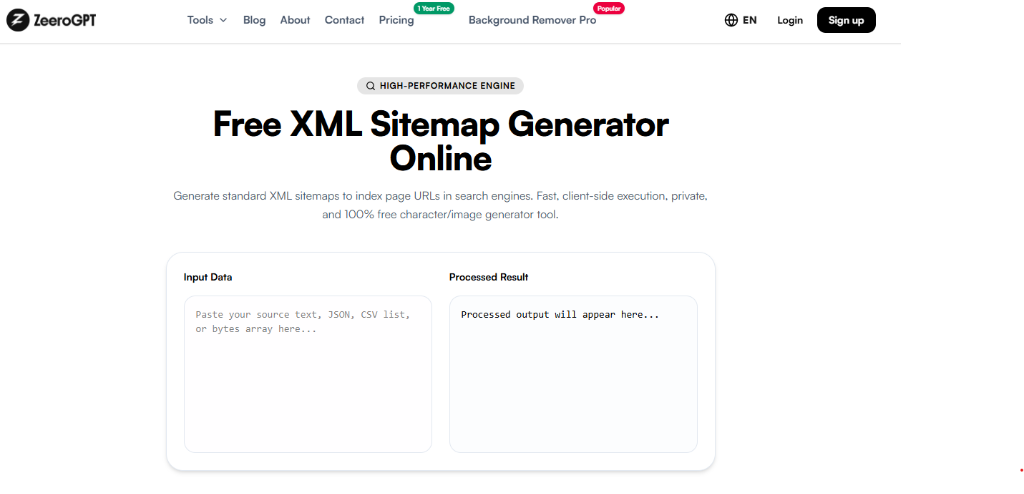
Generate standard XML sitemaps to index page URLs in search engines. Fast, client-side execution, private, and 100% free character/image generator tool.
An XML sitemap is one of the most important technical SEO files for any website. It helps search engines like Google and Bing discover your web pages, understand your site's structure, and crawl your content more efficiently. Whether you manage a blog, business website, eCommerce store, or portfolio, having an up-to-date XML sitemap improves the chances of your important pages being indexed.
The ZeeroGPT XML Sitemap Generator makes creating a valid XML sitemap quick and effortless. Instead of manually listing every page on your website, the tool automatically generates a properly structured sitemap that follows search engine standards. It's a simple way to improve your website's SEO and help search engines find your content faster.
An XML sitemap is a file, usually named sitemap.xml, that contains a list of the important URLs on your website. It acts as a roadmap for search engines, making it easier for their crawlers to discover and index your pages. Besides URLs, a sitemap can also include information such as the last modification date of each page. Google supports XML sitemaps because they provide the most flexibility and additional metadata.
A simple XML sitemap structure looks like this:
<?xml version="1.0" encoding="UTF-8"?>
<urlset xmlns="http://www.sitemaps.org/schemas/sitemap/0.9">
  <url>
    <loc>https://example.com/</loc>
    <lastmod>2026-07-13</lastmod>
  </url>
</urlset>Creating an XML sitemap offers several SEO benefits:
The XML Sitemap Generator is ideal for Website Owners, Bloggers, SEO Professionals, Digital Marketers, Web Developers, eCommerce Businesses, Agencies, Small Business Owners, and Content Creators.
| XML Sitemap | HTML Sitemap |
|---|---|
| Designed for search engines | Designed for website visitors |
| Lists URLs in XML format | Displays links in a web page |
| Improves crawling and indexing | Improves website navigation |
| Submitted to search engines | Accessible through the website |
| Supports SEO | Supports user experience |
Both types of sitemaps are useful, but an XML sitemap plays a more important role in helping search engines understand your website.
An XML sitemap is one of the simplest yet most valuable tools for improving your website's technical SEO. While it doesn't guarantee higher search rankings, it helps search engines discover, crawl, and index your important pages more efficiently. The ZeeroGPT XML Sitemap Generator makes the entire process quick and hassle-free, allowing you to create a standards-compliant sitemap in just a few clicks. Whether you manage a personal blog or a large business website, generating and maintaining an XML sitemap is a smart step toward better search visibility.